Descriptions
The Bali Pass trek is a difficult 9-day crossing in Uttarkashi district, Uttarakhand, from Sankri in the Har Ki Dun valley to Janki Chatti near Yamunotri, over a pass at about 4,950 m (16,240 ft). Himalayan Holidays runs it as a guided package from Dehradun, with forest permits, camps, meals and a trek leader included. Two things decide how it goes: your fitness, and what the weather does on the day. You can check the first months ahead. You plan around the second with a spare day. If you have already finished one high-altitude trek, start with the fitness check below.
Quick answer
The Bali Pass trek takes 9 days from Dehradun and back, covers roughly 45 to 60 km on foot, and tops out at about 4,950 m. It is graded difficult. The workable months are May to June and September to October. Book two to three months ahead, send us your last high-altitude trek, and plan one spare day for weather.
Bali Pass trek at a glance
| Detail | Information |
|---|---|
| Route | Dehradun, Sankri, Seema, Devsu Thatch, Ruinsara Tal, Odari, Bali Pass base camp, Bali Pass, Lower Dhamni, Janki Chatti, Dehradun |
| Duration | 9 days, 8 nights, plus one recommended spare day |
| Grade | Difficult |
| Highest point | Bali Pass, about 4,950 m (16,240 ft) |
| Distance on foot | About 45 to 60 km (operator listings range from 38 to 70 km, depending on roadhead and campsites) |
| Best months | May to June, September to October |
| Start and end | Dehradun pickup and drop |
| Stay | Sankri stay, then tents on twin sharing |
| Permits | Forest entry permit and camping fees arranged with your booking |
| Mobile network | None after Sankri |
| Price and dates | Quote on enquiry |
| Booking | WhatsApp +91 98210 88817, phone or email |
For batch dates and a quote, message us on WhatsApp.
Highlights of the Bali Pass trek
- A one-way crossing from the Tons valley to the Yamuna valley, so you do not walk the same ground twice
- Ruinsara Tal and Swargarohini, then Bandarpoonch and Kala Nag from the pass
- Devsu Thatch, a forest meadow camp ringed by oak, silver fir and deodar
- Villages such as Dhatmeer, Dharkot and Gangad, with Koti-Banal houses of wood, stone and slate
- Govind Pashu Vihar National Park, a 958 sq km protected area that is home to the Himalayan monal, musk deer and bharal
Who the Bali Pass trek suits
Who should do the Bali Pass trek
It suits you if you have:
- Finished a moderate or difficult Himalayan trek
- Slept well above 3,000 m without trouble
- The stamina to walk 7 to 10 hours on a hard day
Wait and build up first if your longest trek is a weekend walk. Start with Har Ki Dun and come back to this one.
See your doctor before booking if you have ever been sick at altitude, or if you have asthma, a heart or lung condition, diabetes or high blood pressure. Some operators ask trekkers above 58 to 60 for a treadmill test, so ask us what applies to you.
Program
Operators list different distances for the same day because roadheads and campsites differ, so read the figures below as ranges. Altitudes are rounded. Keep one spare day after Day 9 in case weather delays the crossing.
Day 1: Dehradun to Sankri
Drive about 190 to 220 km depending on the route, with 8 to 10 hours on the road including breaks, via Mussoorie, Kempty Fall, Purola and Mori. IDs are checked at a forest check post on the way. Sankri sits at about 1,920 m and is the base for many treks on the Har Ki Dun side. Stay at a Sankri guesthouse or camp, and use the evening to pack and sort your gear.
Day 2: Sankri to Seema
Drive about 18 km, 1.5 hours, to Dhatmeer, where the walk starts. From there it is 8 to 10 km, 5 to 7 hours, through forest and past village fields near Dharkot and Gangad, over a stream bridge, with the Supin river flowing below. Seema sits at about 2,560 m. Stay in tents on twin sharing.
Day 3: Seema to Devsu Thatch
Walk 6 to 8 km, 4 to 6 hours. The trail climbs gradually through oak, silver fir and deodar forest, with snow peaks showing through the gaps, then takes a last steep rise to the meadow. Devsu Thatch sits at about 3,100 m, and Black Peak is visible from camp.
Day 4: Devsu Thatch to Ruinsara Tal
Walk 7 to 10 km, 4 to 6 hours. The trail drops about 100 m to the Ruinsara river, then climbs steadily, with sections damaged by landslides in places. Ruinsara Tal, at about 3,600 m, lies below Kala Nag, and Bandarpoonch and the Swargarohini peaks are in view from the lake.
Day 5: Ruinsara Tal to Odari
A short day: 4 km, 3 to 4 hours, climbing to about 4,000 m. Odari is named for a natural rock cave at the end of the meadow, and Swargarohini fills the view. Rest in the afternoon, drink steadily and tell your leader about any headache, because you now sleep above 4,000 m.
Day 6: Odari to Bali Pass base camp
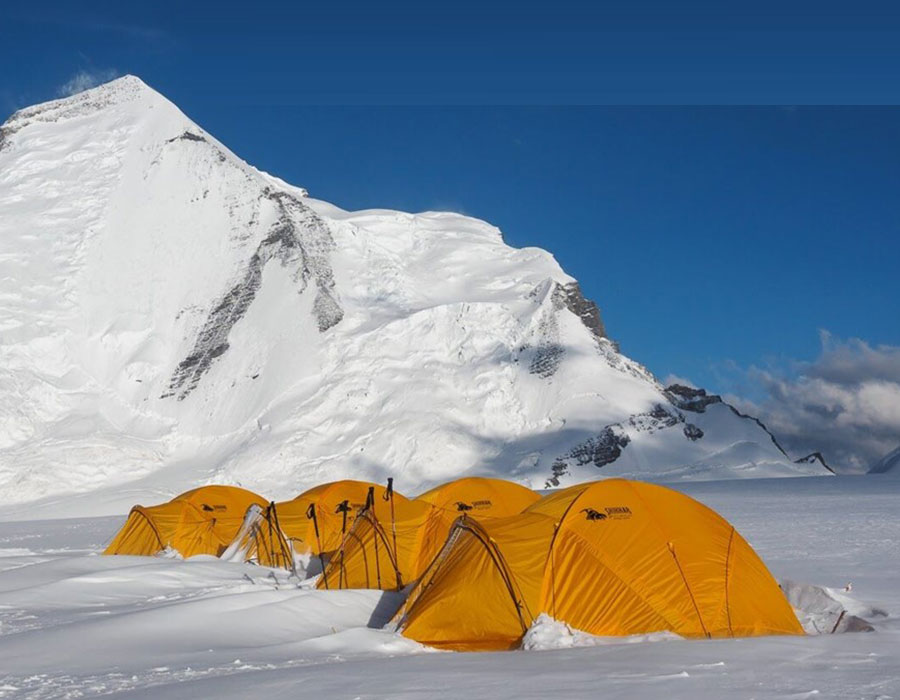
Walk 3 to 5 km, taking 3 to 7 hours depending on conditions and group pace. The ground is steep and rocky, and the route follows the narrow Narma Kandi ridge. Camp is at about 4,650 m, your highest night and a rise of about 650 m from Odari. Nights here run near or below freezing, so eat well and sleep early.
Day 7: Over Bali Pass to Lower Dhamni
This is the longest day: 12 to 14 km, 9 to 11 hours. You leave in the dark, usually well before sunrise, while the snow is still firm. The climb runs over loose rock and old snow to the col at 4,950 m. Near the top, the leader checks how everyone is breathing and what the weather is doing, and can turn the group back if cloud builds or someone struggles.
From the pass, Bandarpoonch and Kala Nag come into view. The descent to Lower Dhamni, also spelt Damini, is steep and loose, with fixed ropes where needed, and it is hard on the knees. Camp is at about 3,400 m.
Day 8: Lower Dhamni to Yamunotri and Janki Chatti
Walk 6 to 8 km, 3 to 5 hours, down through forest to the Yamunotri trail. The trail passes Yamunotri temple, one of the Char Dham pilgrimage sites, at about 3,300 m. Whether the group stops there depends on the weather, the hour and whether the temple is open. The trek ends at the Janki Chatti road head, at about 2,600 m.
Day 9: Janki Chatti to Dehradun
Drive about 170 km via Barkot, 7 to 8 hours. You reach Dehradun in the evening, so book onward travel for the next day, or use the spare day if weather delayed you earlier.
Two scenarios to plan for on the Bali Pass trek
You wake at base camp with a headache. Tell your leader at once. You rest and are checked, and if symptoms persist you go down with a guide instead of going up. Missing the pass is a smaller loss than a bad night at 4,650 m.
Cloud builds near the col. The leader makes the call, and the group waits, turns back or uses the spare day. Nobody pushes on against it.
Bali Pass trek difficulty and fitness
Nearly every operator grades the Bali Pass trek difficult, and the grade holds up. You sleep at about 4,650 m the night before the crossing. The approach follows the narrow Narma Kandi ridge, and the pass day itself is long. The descent on the Yamunotri side is steep and loose, with fixed ropes in places. Help is far away: there is almost no network, and an evacuation can take most of a day.
A common benchmark is about 5 km in 30 to 32 minutes. Treat it as a rough check only, because running pace tells you less than hours of uphill walking with a loaded pack. Build up over 6 to 8 weeks:
| Weeks | Focus |
|---|---|
| 1 and 2 | Run or fast-walk 3 to 4 days a week, about 4 km, plus squats and step-ups |
| 3 and 4 | Runs of about 6 km, plus two 8 km walks with a 6 to 8 kg pack |
| 5 and 6 | Reach 5 km in 30 to 32 minutes, and finish with one 12 to 15 km hill walk with a loaded pack |
Kedarkantha, which tops out near 12,500 ft, and Har Ki Dun are useful warm-ups if you want to test yourself first.
Best time for the Bali Pass trek
| Months | What to expect | Verdict |
|---|---|---|
| May to June | Snow patches on upper ridges early on, long days, green meadows | Good window |
| September to October | Clear skies after the monsoon, colder nights | Good window |
| July to August | Heavy rain, landslides, slippery trails on the Ruinsara side | Avoid |
| November to April | Heavy snow | Not suited to a standard departure |
Indicative camp temperatures from operator listings: roughly 12 to 17°C by day in May and June, with nights close to 0°C higher up. In September and October, days are cooler at about 10 to 14°C, and nights can fall to between 0 and minus 3°C at the upper camps. Snow cover on the upper sections changes from year to year, and fresh snow can arrive in September and October. Check the forecast before you travel.
Bali Pass trek price and batch dates
Prices for the Bali Pass trek vary a lot between operators, so compare what each quote covers, not just the total. Group size, tent quality, guide ratio, Dehradun pickup and a built-in spare day all move the number. For the current price and 2027 batch dates, message us on WhatsApp.
Hidden charges are where budgets slip. Check these before you compare quotes:
- Trek insurance, which some operators bill separately
- Backpack offloading, which some operators charge per day
- Extra nights in Dehradun or Sankri if the pass is delayed
- Rental gear such as gaiters, poles and a down jacket
The season gives you about four months a year, so a missed batch often means waiting for the next window.
Cancellation and weather
Get the cancellation and weather terms in writing before you pay. Ask what happens if the pass closes or the trek is cut short, because refunds after a trek has started are often limited. Book flexible flights, and keep the buffer day free.
How to book the Bali Pass trek
- Send us your trekking history and your preferred month.
- We confirm whether the batch suits your experience and share dates and price.
- Pay the booking amount to hold your slot.
- Arrange trek insurance that covers high altitude, and prepare your documents: original photo ID with two photocopies, a signed disclaimer and a recent doctor's medical certificate.
- Meet the team at the Dehradun pickup point early in the morning and drive to Sankri.
Withdraw cash in Dehradun before the drive, and do not count on ATMs after that.
Bali Pass trek from Delhi: how to reach Dehradun
Reach Dehradun the day before departure. Flights land at Jolly Grant Airport, about 25 km from the city, and trains and buses from Delhi take roughly 5 to 6 hours. The drive back from Janki Chatti takes about 8 hours, so book onward travel for the day after Day 9, or use the spare day.
Bali Pass trek safety: altitude and emergency exits
Altitude sickness shows up as headache, nausea, dizziness, poor appetite and broken sleep. Tell your trek leader early, and if symptoms worsen you descend. Fitness does not protect you, since fit trekkers get sick too. The common guideline above 3,000 m is to raise your sleeping altitude by no more than about 500 m a day. This route stays close to that pace until Day 6, when sleeping altitude rises about 650 m, so rest properly at Odari. Do not take altitude medicines such as Diamox unless your doctor has advised them.
The route has two ways out. Before the pass, the way out is back down to the roadhead and the Sankri road. After it, you descend to Janki Chatti. Neither is guaranteed, because weather, landslides and injury can slow an evacuation. Major hospitals are in Dehradun and Mussoorie, several hours away by road, so the leader's daily health checks at camp matter.
Permits and rules to check for 2027
The Bali Pass trek runs inside Govind Pashu Vihar, where entry needs online registration and a hard-copy permit from the park's head office at Purola. We arrange the permit as part of your booking. Foreign nationals need a passport and a valid visa, and permit charges can differ, so mention it when you enquire.
A 2026 proposal in Uttarakhand would require operator registration, medical fitness certificates and a minimum age of 14 for high-altitude expeditions. It is not final. Confirm the current age and document rules with us before you pay. Our Kedarkantha budget guide mentions the same draft.
What to carry on the Bali Pass trek
These items matter most on this route:
- Waterproof, high-ankle trekking boots, already broken in
- Warm layers: three in May and June, four in September and October
- Woollen cap, waterproof gloves, thick woollen socks, sun cap and sunglasses
- Headlamp, trekking poles and a rain cover for your backpack
- A power bank, since there are no charging points on the trail
- A personal medical kit with ORS and your regular medicines
Common mistakes on the Bali Pass trek
- Booking this as a first high-altitude trek
- Packing too few layers because the days feel warm
- Wearing new boots on Day 1
- Booking a train or flight out of Dehradun for the evening of Day 9
- Ignoring a headache on Day 5 or Day 6 because the pass is close
- Picking an operator on price alone without asking about guide ratio and oxygen
Pro tips
- Train with the backpack you will carry on the Bali Pass trek, not a light daypack.
- Carry gaiters in May and June, when snow lingers near the pass.
- Keep phone and camera batteries inside your sleeping bag at night, because cold drains them.
- Eat on the climb even when you are not hungry.
Bali Pass trek versus Har Ki Dun
| Bali Pass trek | Har Ki Dun | |
|---|---|---|
| Grade | Difficult | Easy to moderate |
| Shape | One-way crossing | Out and back |
| Length | 9 days with drives | 7 days |
| Experience needed | Prior high-altitude trek | Beginners can manage |
| Best for | Experienced trekkers wanting a pass | First Himalayan treks |
Our Har Ki Dun trek is a good test before committing to the pass.
Why choose Himalayan Holidays for the Bali Pass trek
- Recognised by the Ministry of Tourism, Government of India, as an Inbound Tour Operator and Adventure Tour Operator, and registered with the Indian Mountaineering Foundation
- A unit of Shikhar Travels, with an office in Lajpat Nagar, New Delhi
- Member of ATOAI and IATO
- Fixed departures and customised dates for groups
- WhatsApp and phone support for planning and during the trip
Bali Pass trek FAQs
How difficult is the Bali Pass trek?
Difficult. A night above 4,500 m, a 9 to 11 hour pass day and a steep descent make it right for experienced trekkers only.
Is the Bali Pass trek safe?
It is safe with the right experience, fitness and a guided group. The main risks are altitude sickness, a steep descent and weather, which is why we ask for your trekking history first.
What is the best month to go?
May to June and September to October. July and August bring heavy rain and landslides.
What is the highest altitude?
Bali Pass, at about 4,950 m or 16,240 ft.
Can a beginner do it?
No. Start with Har Ki Dun or another moderate trek, then return for the pass.
Where does it start and end?
It starts at Sankri and ends at Janki Chatti, with Dehradun as the pickup and drop point.
How do I reach Dehradun from Delhi?
Trains and buses take roughly 5 to 6 hours, and flights land at Jolly Grant Airport near Dehradun. Arrive the day before the trek starts.
How much does the Bali Pass trek cost?
It depends on the batch, group size and what the quote covers. Message us for the current price and 2027 dates.
Do I need a permit?
Yes. The route is inside Govind Pashu Vihar National Park, so entry needs registration and a permit from the park's Purola office. We arrange it as part of your booking.
Is there mobile network or an ATM on the way?
There is almost no network after Sankri. Do not count on ATMs once you leave Dehradun, so withdraw cash there.
What happens if weather closes the pass?
The trek leader decides on the day. The group may wait, use the spare day or turn back.
Can I visit Yamunotri on this trek?
Yes. Our route passes Yamunotri on Day 8, and the group can stop at the temple if weather, timing and opening dates allow.
Do I need trek insurance?
Yes. Many standard travel policies exclude high-altitude trekking, so read the cover before you buy.
Where is the Bali Pass trek?
In Uttarkashi district, Uttarakhand, between the Har Ki Dun valley and the Yamunotri valley.
Is the Bali Pass trek worth it?
Yes, if you already trek at altitude and want a pass crossing that ends in a different valley. If you want a gentler walk, do Har Ki Dun first.
Plan your Bali Pass trek
The route is demanding and the season is short, so preparation starts months before departure. Check your fitness against the 5 km benchmark, pick a month, and send us your trekking history. We will say whether this batch suits you or whether another trek should come first.
| Contact | Details |
|---|---|
| +91 98210 88817 | |
| Phone | +91 97178 91151 |
| tours@shikhar.com | |
| Office | M-66, Ground Floor, Lajpat Nagar-2, New Delhi 110024 |
Price & Inclusions
On Request
Inclusion Details
- Transport from Dehradun to Sankri and from Janki Chatti back to Dehradun
- Forest permits and park camping fees
- Guesthouse or camp at Sankri, then tents on twin sharing
- Meals during the trek
- Trek leader, local guides, cook and support staff
- Sleeping bags, mattresses and toilet tents
- First-aid kit and oxygen cylinder
- Rope and technical gear for the pass when needed
Exclusion
- Meals on the road on Day 1 and Day 9
- Trek insurance and backpack offloading
- Personal gear and personal expenses
- Extra stay or transport caused by weather, landslides or road closures
- Evacuation costs
Enquire Now
Photo Gallery


Our Group Sites