Descriptions
Mount Kalanag, also known as Black Peak or Kala Nag, is a mountain in the Uttarkashi district of Uttarakhand, located within the Govind Pashu Vihar National Park in the Garhwal Himalaya. Standing at 6,387 meters (20,955 ft) above sea level, it is the highest peak in the Bandarpunch (Bandarpoonch) massif — a group that also includes Bandarpunch I (6,316m) and Bandarpunch II / White Peak (6,102m). The name 'Kalanag' translates to 'Black Serpent' in Hindi, earned from its dark, imposing rock ridgelines visible even from Mussoorie on clear days.
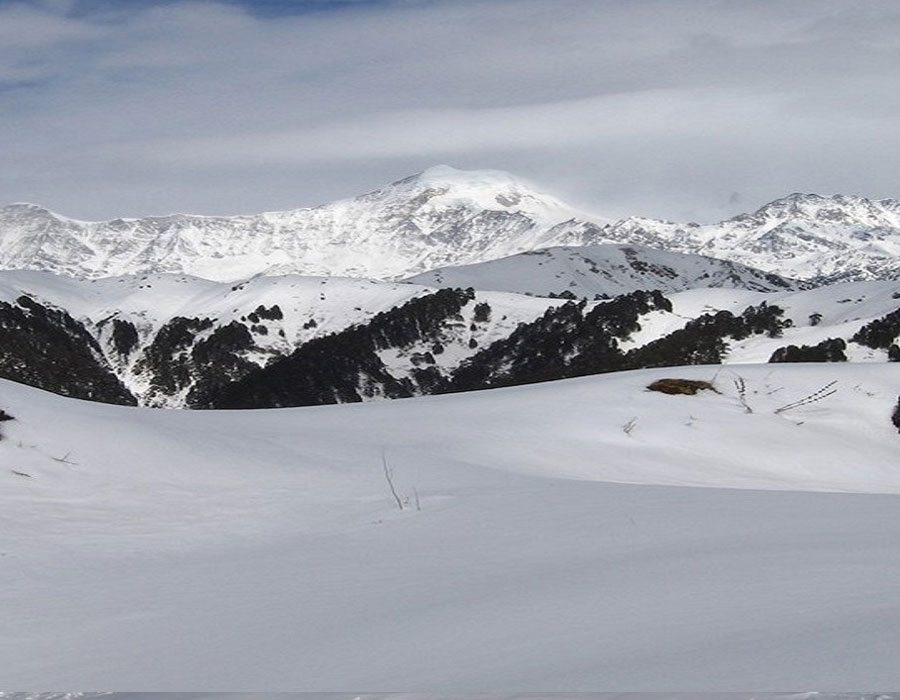
The trek to the summit usually starts from Taluka village and follows a well-defined trail passing through dense forests of oak and rhododendron, open alpine meadows, and the sparkling Ruinsara Tal lake at 3,500m before entering the glacial cirque that guards the peak. The trail becomes steep and rocky as it approaches the summit, making this a challenging and rewarding climb for experienced mountaineers.
The best time to undertake the Black Peak (Kalanag) Expedition is May to June and September to October. Weather is stable and skies are clear during these two windows. The September–October post-monsoon season offers the clearest summit views. Avoid July–August due to monsoon rain, slippery trails, and rockfall risk.
Full travel route: Dehradun → Sankri → Taluka → Osla → Ruinsara Tal → Kyarkotti Base Camp → Advanced Base Camp → Camp 1 → Summit Camp → Summit Kalanag (6,387m) → Descent → Ruinsara Tal → Sankri → Dehradun
What Makes Kalanag Technically Demanding?
Unlike popular trekking peaks, Kalanag demands real mountaineering skills. The expedition involves:
- A near-vertical 75-foot ice wall with a 70° gradient — the technical crux of the climb, requiring confident front-pointing crampon technique
- Sustained glacier travel with crevasse navigation (roped travel mandatory)
- Fixed rope sections on the upper mountain
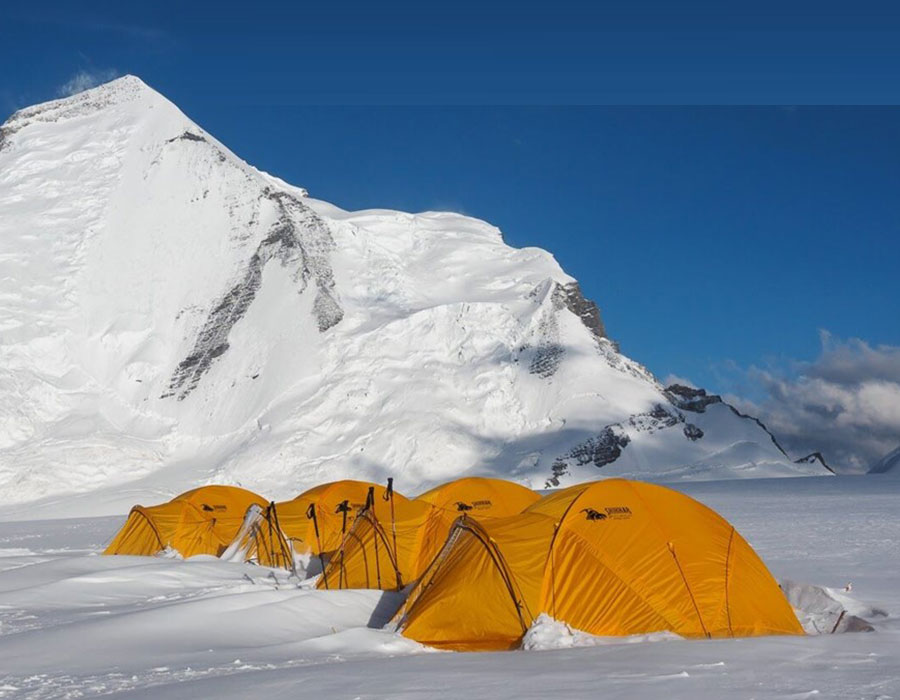
- High-altitude camping above 5,000m for multiple nights
- Rock scrambling on moraine during the approach
Difficulty: Difficult / Technical
Suitable for: Climbers with prior BMC (Basic Mountaineering Course) or equivalent training; 5,000m+ experience preferred
Minimum age: 16 years (16–17 must be accompanied by parent/guardian)
The Ruinsara Valley — A Hidden Himalayan Gem
The approach passes through one of Uttarakhand's most beautiful and least-commercialized valleys. Starting from Sankri village (1,950m) — also the base for the Kedarkantha Trek and Har Ki Dun Trek — the route climbs through ancient forests to the pristine Ruinsara Lake, then through Osla village with its distinctive stone-and-wood architecture and the historic Duryodhana temple.
Program
Day 01: Dehradun to Sankri (1950 m)
Pick up from Dehradun and drive to Sankri village. Overnight stay in a guest house or homestay.
Meals: Lunch, Dinner
Day 02: Sankri to Osla (2560 m) Drive and trek
After breakfast in Sankri, we will drive to Taluka village, which is 12 km from Sankri. From Taluka, start the trek to Osla village. Overnight stay in camp.
Meals: Breakfast, Lunch, Dinner
Day 03: Osla To Ruinsara Tal (3120 m) Trek
Today we will trek to Ruinsara Tal (lake) and stay for a night in tents near Ruinsara Lake.
Meals: Breakfast, Lunch, Dinner
Day 04: Ruinsara Tal to Base Camp of Black peak Kyarkoti (4045 M) Trek
After breakfast, we will start the trek to Base Camp, also known as Kyarkoti. It is at an altitude of around 4,050 meters. Overnight stay in tents and Kyarkoti base camp.
Meals: Breakfast, Lunch, Dinner
Day 05-12: CLIMBING PERIOD
The next 8 days are to climb Mt. Black Peak and come back to base camp.
Meals: All meals, including high-altitude food
Day 13: Base Camp to Ruinsara Tal Trek
After breakfast, we will trek back to Ruinsara Tal. Upon arrival, set up the camp for an overnight stay.
Meals: Breakfast, Lunch, Dinner
Day 14: Ruinsara Tal to Sankri trek and drive
After breakfast, trek back to Taluka and drive back to Sankri. Upon arrival, check in at the homestay for an overnight stay.
Meals: Breakfast, Lunch, Dinner
Day 15: Sankri – Dehradun Drive
Morning: after breakfast, drive to Dehradun. Our vehicle will drop you off at your desired location in Dehradun.
Meals: Breakfast + Lunch
FAQ's
Q: Is Black Peak a beginner's climb?
A: No. Kalanag is rated Difficult / Technical. It includes a 75-foot near-vertical ice wall and sustained glacier travel. Prior mountaineering training (BMC or equivalent) and experience at 5,000m+ is required.
Q: What permits are required?
A: An IMF (Indian Mountaineering Foundation) climbing permit and forest/camping permissions for Govind Pashu Vihar National Park are required. Both are included in our package price.
Q: How do I reach Sankri?
A: Sankri is approximately 200km from Dehradun (Jolly Grant Airport / Dehradun Railway Station). Our package includes pickup from Dehradun.
Q: What is the success rate?
A: Typically 60–75% depending on weather and team fitness. Our September–October batch has higher summit success due to post-monsoon clarity and stable weather conditions.
Q: What is the technical crux of the climb?
A: The 75-foot near-vertical ice wall with a 70° gradient on the approach to Camp 1. This section requires confident front-pointing crampon technique and ice axe use. Fixed ropes are in place but physical ability to ascend them is essential.
Price & Inclusions
1,44,500/-
Inclusion Details
- 05% GST.
- Accommodation in a double or twin room in Sankari.
- Accommodation in tents during trekking, climbing, and base camp.
- Peak booking fee of the IMF (Indian Mountaineering Foundation).
- Expedition fee.
- All meals are as per the itinerary, including high-altitude food.
- Camping fees to the forest department.
- First-aid kit with an oxygen cylinder.
- All Transportation by tourist vehicle as per Itinerary
- Use of a satellite phone for emergency use (subject to availability).
- Services of Himalayan Holidays Sardar (base camp manager) during the expedition.
- Services of a mountain guide and high porter during the expedition
- Complete kitchen and camp equipment, including camp staff, until base camp. It is recommended that clients bring their own sleeping bags.
- All necessary Climbing equipment, i.e. Fix rope, Climbing rope, high-altitude tent, Carabiner, Snow bar, Ice piton, etc.
- Transportation of members’ luggage, maximum 25 kg per person, up to Base Camp.
Exclusion
- Any airfare.
- Personal clothing and gear required for climbing (personal climbing equipment).
- Personal expenses such as table drinks, rooms services items, laundry, telephone calls at hotels or tips, etc.
- Personal high-altitude porter.
- Any accommodation in Dehradun.
- Any other service or item that is not mentioned as “Inclusion Details”.
Enquire Now
Photo Gallery


Our Group Sites