Descriptions
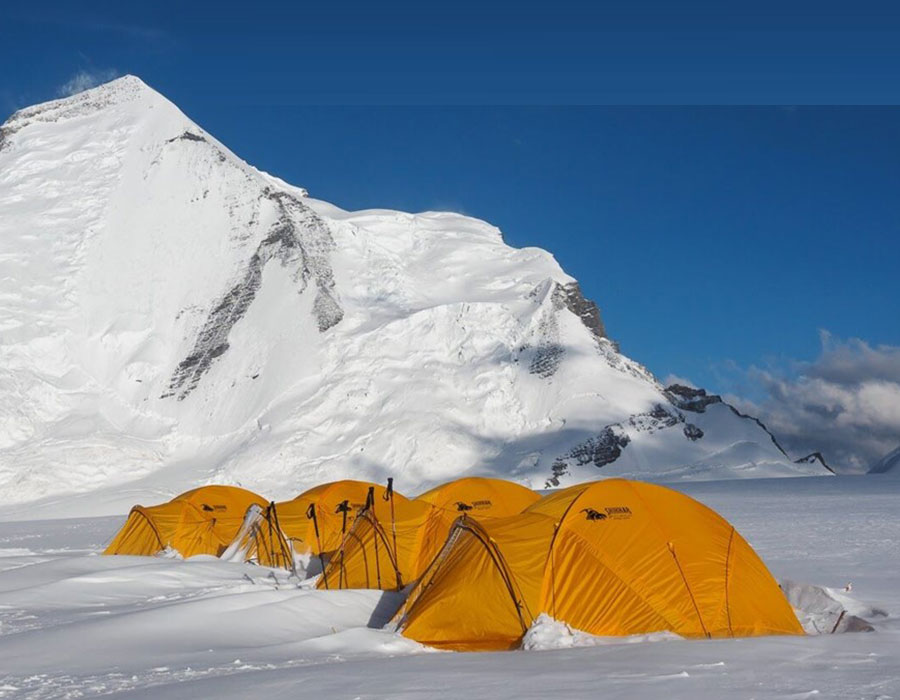
Mt. Menthosa (6,440 m / 21,129 ft) is the second-highest peak in the Lahaul–Spiti region of Himachal Pradesh and one of the most challenging and rewarding technical expedition peaks in the entire Indian Himalayan range. Located deep in the remote Miyar Valley — accessible from Udaipur village in Lahaul — Menthosa sees fewer than a handful of expeditions each year, offering an experience of genuine wilderness, technical challenge, and historical significance.
The mountain was first successfully summited in 1970 by a British Service Expedition led by Captain S. Bembrose. In the decades since, it has retained its reputation as an expedition-class objective requiring experienced mountaineering teams, high-altitude camping competency, and sustained technical climbing ability.
This expedition is for serious mountaineers. It is not appropriate for first-time high-altitude climbers or trekkers stepping into technical terrain for the first time. If you have completed your 6,000 m progression and are looking for a remote, demanding, historically significant summit in the Western Himalayas — Menthosa is the answer.
Quick Facts
|
Detail |
Info |
|
Peak Height |
6,440 m (21,129 ft) |
|
Location |
Miyar Valley, Lahaul district, Himachal Pradesh |
|
Significance |
Second-highest peak in the Lahaul–Spiti region |
|
First Ascent |
1970 — British Service Expedition, led by Capt. S. Bembrose |
|
Duration |
20 Days / 19 Nights |
|
Difficulty |
Advanced Technical — glacier travel, steep snow and ice |
|
Route |
Manali → Udaipur → Urgos → Base Camp (4,000 m) → High Camps → Summit (6,440 m) |
|
Base Camp |
~4,000 m in Miyar Valley |
|
Best Season |
June to September (expedition page states Sep–Oct — confirmed as June–Sep is optimal) |
|
Package Price |
₹2,14,500/- per person |
|
Experience Required |
Prior 6,000 m+ expedition; advanced technical mountaineering skills |
2026 Expedition Window
One batch available for 2026:
- 18 September – 08 October 2026 (20 days)
Due to the remote, logistically complex nature of the Miyar Valley approach and the high-altitude technical commitment, Himalayan Holidays operates a limited number of Menthosa expeditions per season. Early inquiry and registration is strongly advised.
Program
Day 1 — Arrival in Manali (2,050 m)
Arrive in Manali. Meet Himalayan Holidays expedition leader. Afternoon briefing: full 20-day route overview, team assignments, technical sections review, safety protocols, insurance documentation, and equipment inspection.
Meals: Dinner | Stay: Hotel, Manali
Day 2 — Manali → Udaipur (2,745 m) | Drive 110 km
Drive to Udaipur via the Atal Tunnel and the Lahaul Valley. The tunnel connects the Kullu Valley to Lahaul year-round, eliminating the Rohtang Pass obstacle. Udaipur is a charming village in Lahaul at the junction of the Miyar Valley — known for the famous Triloknath Temple (accessible as a day excursion from base).
Drive: ~4.5 hrs | Meals: Breakfast + Lunch + Dinner | Stay: Hotel/Camp, Udaipur
Day 3 — Udaipur → Tingrit → Urgos (3,250 m) | Drive 23 km
Drive deeper into the Miyar Valley — one of the most beautiful and least-visited valleys in the Western Himalayas. The valley is flanked by towering unnamed peaks and glaciers dropping to the valley floor. Urgos is a small settlement where the main expedition team joins: cook, kitchen staff, porters, and additional local guides.
The Miyar Valley is home to a unique cultural blend of Buddhist and pre-Buddhist traditions among the Lahaul people.
Drive: ~1.5 hrs | Meals: Breakfast + Lunch + Dinner | Stay: Tents, Urgos
Day 4 — Urgos → Menthosa Base Camp (~4,000 m) | Trek 7 km
The 7 km trek to Base Camp is moderately challenging with a gradual ascent through the Miyar Valley floor. Panoramic views of surrounding peaks above 3,800 m line the approach. The final kilometre is a steeper push to the Base Camp plateau at approximately 4,000 m.
Base Camp is your home for the next 14 days. Take time to observe the terrain, identify the approach to the glacier, and begin physical and mental preparation.
Trek: 4–5 hrs | Meals: Breakfast + Lunch + Dinner | Stay: Tents, Base Camp
Days 5–17 — Climbing Phase: Base Camp → Summit → Base Camp (13 Days)
This is the core 13-day expedition phase. The structured schedule is managed by the expedition leader based on weather, acclimatisation response, and team fitness. The typical sequence is:
- Days 5–6: Base Camp acclimatisation; equipment sorting; glacier reconnaissance hike
- Days 7–8: Camp 1 establishment; load ferry; glacier and snow terrain training
- Days 9–10: Camp 2 establishment; high-altitude acclimatisation rotation
- Days 11–12: Final summit camp (Camp 3) established if route demands it
- Day 13: Summit push — Mt. Menthosa (6,440 m) attempt via established high camps
- Day 14: Reserve/buffer for weather delay or second summit attempt
- Days 15–17: Systematic high camp de-establishment; return to Base Camp
At 6,440 m, the summit of Menthosa offers an extraordinary high-altitude panorama: the Miyar Glacier complex below, the Kullu-Lahaul divide, Deo Tibba, the Shigri Glacier, and on clear days, peaks into both Spiti and Zanskar.
Meals: High-altitude specialist food provided throughout
Day 18 — Base Camp → Urgos → Udaipur
Base camp dismantled. Trek from Base Camp to Urgos (retracing Day 4 route), then vehicle to Udaipur. Overnight at hotel or tents.
Meals: Breakfast + Lunch + Dinner | Stay: Hotel/Tents, Udaipur
Day 19 — Udaipur → Manali
Drive back to Manali via the Lahaul Valley and Atal Tunnel. Check into hotel. Celebration dinner and expedition debrief with the full team.
Meals: Breakfast + Lunch + Dinner | Stay: Hotel, Manali
Day 20 — Departure from Manali
After breakfast, check out and proceed with onward journeys. Mt. Menthosa Expedition officially concluded.
Meals: Breakfast
Price & Inclusions
₹254500/-
Inclusion Details
- All necessary expedition permits — IMF permission + local authority documentation
- Camping in Himalayan Holidays expedition tents throughout climbing phase
- Hotel in Manali, Udaipur, and Urgos where applicable
- All meals — breakfast, lunch, dinner, and specialist high-altitude food
- Technical equipment: climbing shoes, crampons, ice axe, seat harness, carabiner, climbing rope, Jumar
- Transportation by well-maintained vehicle as per programme
- Expedition leader, guide, and full kitchen staff
- First Aid Kit and oxygen cylinder
Exclusion
- Personal expenses: drinks, room service, laundry, tips
- Personal high-altitude Sherpa
- Costs from weather, illness, natural disasters, or programme disruptions
- Liability for injury, loss of life, accidents, or loss of goods
- Cargo and shipment charges (import and customs clearance for foreign nationals)
- Personal items: sleeping bags, trekking poles, personal clothing
- Foreign national peak booking surcharges
Who Should Attempt Mt. Menthosa?
Mt. Menthosa is exclusively for experienced, technically capable mountaineers. The following minimum profile applies:
- Prior summit of a 6,000 m+ peak — mandatory
- Glacier travel experience: crevasse avoidance, rope team management, self-arrest
- Ice and snow technical climbing: ability on 45–55° slopes with crampons and ice axe
- High-altitude camping experience: multi-day tent living above 5,000 m
- Excellent cardiovascular fitness: regular training 4–6 months before departure
- Mental resilience: 20-day commitment with remote terrain and unpredictable weather
The Miyar Valley — What to Expect
The Miyar Valley is one of the most spectacular and least-touristed valleys in the Indian Himalayas. The approach from Udaipur takes you through landscapes that most trekkers and mountaineers never see — high glacier-fed streams, flowering meadows at 3,500 m, and towering unnamed walls of granite and ice on either side.
The valley has a small, resilient human population — Lahauli people of Tibetan Buddhist heritage who have lived alongside these mountains for centuries. Interaction with locals at Urgos and Tingrit offers cultural context that enriches the expedition experience beyond the climb itself.
Mobile network coverage drops to nil beyond Udaipur. Satellite communication (provided by Himalayan Holidays) is the only reliable contact with the outside world during the climbing phase.
Frequently Asked Questions
1. What makes Menthosa different from other 6,000 m peaks in Himachal?
Menthosa is the second-highest peak in the entire Lahaul–Spiti region at 6,440 m. Its remote Miyar Valley approach, technical mixed terrain, limited annual footfall, and expedition-scale commitment place it firmly in a different category from accessible trekking peaks like Yunam or Friendship Peak.
2. Who first climbed Menthosa?
Mt. Menthosa was first summited in 1970 by a British Service Expedition led by Captain S. Bembrose.
3. What is the best season for Menthosa?
June to September is the optimal climbing window, when the Miyar Valley is accessible and weather is most stable. The single 2026 batch (18 Sep – 08 Oct) is timed for the post-monsoon clarity window when skies stabilise and temperature drops make for better snow conditions.
4. Is satellite communication included?
Yes. Himalayan Holidays provides satellite phone access throughout the expedition. There is no mobile network coverage in the Miyar Valley beyond Udaipur.
5. Is there a weight limit on personal luggage?
Standard porters carry expedition communal gear. Personal luggage allowance and any excess porterage are discussed at the briefing. Sleeping bags and personal clothing are not included in the package and must be arranged by participants.
6. What is the Atal Tunnel and why does it matter for this expedition?
The Atal Tunnel (9.02 km) connects Manali in the Kullu Valley to Sissu in Lahaul, providing year-round vehicular access to the Lahaul region. Before its opening in 2020, access to Lahaul required crossing Rohtang Pass, which was closed from November to May. The tunnel now means Menthosa expeditions can theoretically be accessed from both spring and autumn windows.
Enquire Now
Photo Gallery


Our Group Sites