Descriptions
The Madmaheshwar trek is a four-day walk to a Shiva temple at 3,497 m, one of the five Panch Kedar shrines in Uttarakhand. The trail has no technical sections. It does have one hard day: from Lower Bantoli you climb roughly 5,000 ft, and that day decides how the whole trip feels.
Timing matters this year. The temple reopened on 21 May 2026 and closes for winter in November, so the season has a few weeks left.
|
Quick answer The Madmaheshwar trek is moderate and runs 4 days from Ukhimath. The Badarinath Kedarnath Temple Committee (BKTC) puts the walk from Ransi at 16 km one way, with the temple at 3,497 m. Day 2 is the hard one, with roughly 5,000 ft of climbing. The season is May to October, and the clearest views usually come after the monsoon, from September into October. Price is on request. |
Madmaheshwar trek at a glance
| Detail | Value |
|---|---|
| Duration | 4 Days / 3 Nights |
| Region | Uttarakhand (Rudraprayag district) |
| Activities | Trekking, Adventure, Photography |
| Best Time | May to October. BKTC lists May to November. September to October usually gives the clearest views. |
| Trek starts at | Ransi (Uniyana), the road-head. BKTC measures the walk from Ransi-Uniyana. |
| Distance | About 16 km one way, 32 km return |
| Highest point | Madmaheshwar temple, 3,497 m (11,473 ft) |
| Difficulty | Moderate |
| Temple gates, 2026 | Reopened on 21 May 2026. The temple committee announces the closing date, usually around Vijayadashami in October. The closing is expected in November. |
| Price | On Request |
About the Madmaheshwar trek
Madmaheshwar is one of the five Panch Kedar temples of Lord Shiva in Uttarakhand, steeped in legend. It is said that Lord Shiva's navel fell here after a confrontation with Bhima.
Disguised as a buffalo to evade the Pandavas, Lord Shiva was spotted by Bhima, who seized the animal. In the struggle the buffalo broke into pieces, which fell at various locations. Five of them became the Kedars (Kedarnath, Madmaheshwar, Tungnath, Rudranath and Kalpeshwar). Some accounts add a sixth piece that landed in Nepal, where the Pashupatinath temple now stands.
Madmaheshwar is popularly called the Second Kedar, but BKTC lists it as the fourth temple on the Panch Kedar circuit. The Shri Kedarnath Charitable Trust describes a navel-shaped black stone lingam in the sanctum. In winter the deity is moved to the Omkareshwar temple in Ukhimath.
In addition to being a sacred pilgrimage site for devotees of Lord Shiva, Madmaheshwar has diverse flora and fauna, and the route passes through the Kedarnath Wildlife Sanctuary, known for the Himalayan musk deer.
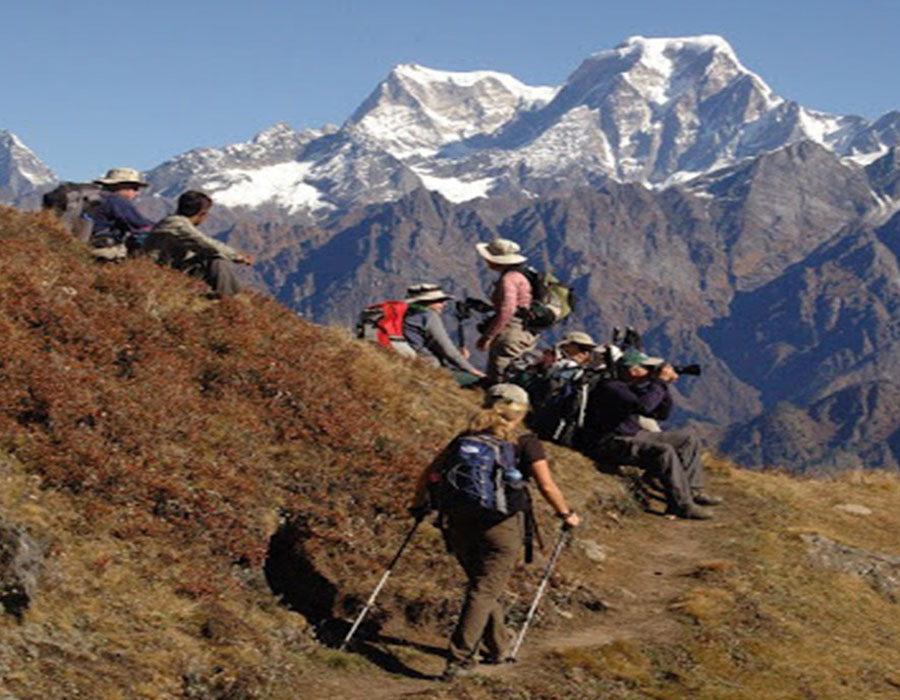
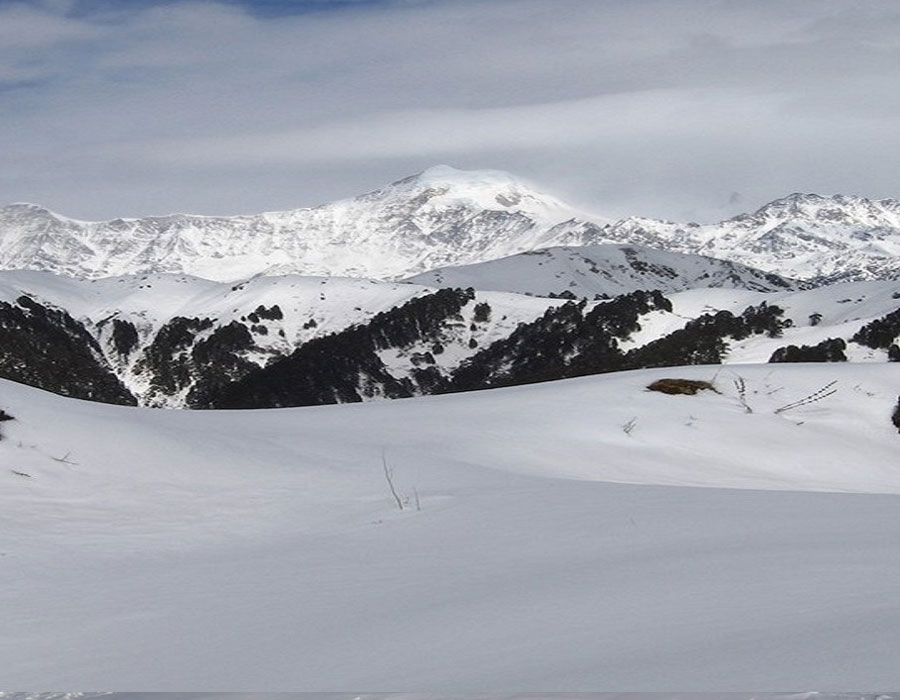
The journey begins in Ukhimath, located about 201 km from Haridwar. The trek from Ukhimath to Madmaheshwar gives views of the Chaukhamba, Kedarnath and Nilkantha peaks throughout the route.
Program
Day 1: Ukhimath to Bantoli (about 2,250 m)
Early in the morning leave Ukhimath by jeep for Uniyana and Ransi, about 25 km away; you will reach in roughly 1.5 to 2 hours. This is where your Madmaheshwar trek starts. Ransi sits at about 1,980 m.
Ransi is a typical hill village on a slope, with a cow dung smell in the air, cottages full of harvested grain straw, and small cultivation plots being weeded by the village women. You will see women making straw bundles everywhere.
There is a famous Rakeshwari temple in Ransi, set against snow-capped peaks. Local belief says Ramachandra meditated here, and so did Lord Soma. The temple was originally called Rameshwari and has an idol of Goddess Tara.
You end today at the village of Bantoli, around 8 km from Ransi. The trail goes through a forest that is not so dense, mostly downhill. Lodges at Lower and Upper Bantoli have simple rooms and meals.
Day 2: Bantoli to Madmaheshwar (3,497 m)
Next morning, most groups start by about 8 AM and move towards Madmaheshwar. This is the hard day of the Madmaheshwar trek: roughly 5,000 ft of climbing over about 6.5 km from Lower Bantoli.
The path is steep, and the forest is a bit dense too. On your way you will cross the small villages of Nanur and Moukhamba. After reaching the destination, visit the holy temple, attend the aarti in the evening and rest there in a hut. Ritual timings can change, so check at the temple.
Day 3: Madmaheshwar to Budha Madmaheshwar and back to Bantoli
Next morning, if you want the sunrise, leave by about 4:30 AM for Budha Madmaheshwar (also written Bura). It is about 2 km above the temple, a climb of roughly 800 to 900 ft that takes an hour or so.
Budha Madmaheshwar is like heaven on earth: another small valley with two ponds surrounded by peaks, and the most attractive is Chaukhamba. "Buda" means old: the small shrine beside the pond is older than the main temple. After worshipping Lord Shiva, return to the temple and walk down to Bantoli to rest there for the night.
Day 4: Bantoli to Ukhimath
Walk down to Ransi to finish the Madmaheshwar trek, and come back to Ukhimath by jeep via Uniyana.
Pacing Days 2 and 3
These are typical timings from Indiahikes' documented route. Your pace and the weather decide the rest.
| When | Plan |
|---|---|
| Day 2, about 8 AM | Leave Lower Bantoli after breakfast. Rest at the benches, buy tea or snacks at the village huts and refill water. |
| Day 2, noon to 3 PM | Reach the temple complex (guides give 4 to 7 hours). Pitch tents before dark if you camp. Food is available at the complex. |
| Day 3, after sunrise | Collect your bags at the complex and head down. Allow at least 6 hours to reach Ransi. |
|
Note for team: first-hand detail The prompt asks for a personal experience section. These timings follow Indiahikes and no story is invented. Add one real observation from a Himalayan Holidays guide or trekker (name, month, what happened). |
Madmaheshwar trek difficulty and fitness
Indiahikes grades the trek easy to moderate. We call it moderate because of Day 2. The trail is non-technical, but the sustained climb to the temple is a real workout, and rain turns the mud slippery.
Madmaheshwar trek for beginners
Fit beginners can do it. Walk, climb stairs and do a few weekend hikes with a loaded pack for a month beforehand. Without that base, the Day 2 climb will be hard.
Altitude and safety
At about 3,500 m, altitude symptoms are possible even though the trek sits below many Himalayan routes. Go slowly, drink water, and tell your leader early about headache, nausea, dizziness or unusual tiredness.
Network is best around Ransi and patchy beyond it, so do not rely on a phone in an emergency. The nearest hospital is in Ukhimath, about 25 km from Ransi. Emergency number: 112.
Best time for the Madmaheshwar trek
| Period | What to expect |
|---|---|
| May to June | The temple reopens (21 May in 2026) and the evening aarti runs. Nights stay cold near the temple. |
| July to August | Monsoon. Clouds hide Chaukhamba, mud makes the trail slippery and landslides can slow the road. Not recommended. |
| September to October | Post-monsoon, and usually the clearest views. |
| Late October to November | Cold at temple altitude, and the temple closes for winter during November. Check the date first. |
| December to April | The temple is closed for winter and regular services stop. Do not plan this as a normal trek. |
How to reach Madmaheshwar
- By Air: Nearest airport is Jolly Grant, Dehradun. BKTC lists it 198 km from Ukhimath.
- By Rail: The nearest railhead is Rishikesh, 174 km from Ukhimath by BKTC's figure. Haridwar is the other common gateway.
- By Road: To reach Madmaheshwar, the road runs from Rishikesh through Devprayag, Srinagar and Rudraprayag to Ukhimath, then about 25 km on to Ransi. Plan a full day. The rest, about 16 km, is on foot.
Places to visit near Madmaheshwar
At Madmaheshwar, the main temple is built in the north Indian Himalayan style and stands in a green meadow just below a high ridge. Another temple on the ridge is an older, blackened shrine opposite the Chaukhamba peaks.
Two smaller temples are dedicated to Goddess Parvati and Ardhanarishvara, and are believed to have been built by Bhima. There is also a marble idol of Saraswati in a small shrine nearby.
- Chopta Chandrashila Trek with Tungnath fits before or after the Madmaheshwar trek. Tungnath is usually rated easy.
- Deoriatal Chandrashila Weekend Trek starts near Ukhimath, close to where the Madmaheshwar trek begins.
Permit and documents for the Madmaheshwar trek
The trail passes through the Kedarnath Wildlife Sanctuary, and the rules on registration can change. Indiahikes says no permission is needed on this pilgrim trail, while some operators describe registration at Ransi. Permit and entry fees are included in our Madmaheshwar trek package. Carry a government photo ID, the actual card and not a photocopy.
Common mistakes and pro tips
- Starting Day 2 late. A 10 AM start means you arrive tired and late.
- Skipping Budha Madmaheshwar at dawn. By mid-morning clouds often cover the peaks.
- Trusting one distance figure for the Madmaheshwar trek. Plan by hours and by the climb.
- Carry trekking poles, enough water for the climb, an electrolyte mix and a power bank. Charging is not guaranteed on the route. See our guide on how to prepare for a high-altitude Himalayan trek.
- Pitch tents near the temple before dark. Indiahikes reports that camping at Budha Madmaheshwar is not allowed, so check local instructions.
Why choose Himalayan Holidays
Recognised by Ministry of Tourism, Government of India as Inbound Tour Operator & Adventure Tour Operator. Registered with Indian Mountaineering Foundation. The ATOAI member directory lists Shikhar Travels India Pvt. Ltd., which runs Himalayan Holidays, as a Lifetime Active Member with a date of establishment of 4 March 1979. See the ATOAI listing, IATA, IATO, ICPB, ADTOI.
Himalayan Holidays is designed to make you experience the local traditions, spiritual culture and bio-diversity of the Himalayas. The office is at M-66 Ground Floor, Lajpat Nagar-2, New Delhi-110024, with a branch at Shikhar Nature Resort, Garampani, Uttarkashi.
FAQs
How many days does the Madmaheshwar trek take?
Four days and three nights from Ukhimath, with 16 km each way from Ransi.
When does Madmaheshwar temple open and close in 2026?
It reopened on 21 May 2026 and closes for winter in November. The temple committee announces the exact date.
Do I need a permit?
Rules can change. Carry your photo ID, and our package covers permit and entry fees
Where does the trek start?
At Ransi (Uniyana), the road-head about 25 km from Ukhimath.
How far is Ransi from Rishikesh?
Rishikesh to Ukhimath is 174 km by BKTC's figure, and Ransi is about 25 km beyond. Plan a full day.
Is there mobile network or an ATM?
Network is patchy beyond Ransi. The last ATM is in Ukhimath.
Where do trekkers stay and eat?
Lodges at Ransi, Gaundar and Bantoli offer rooms and meals, and the temple complex has rooms and food.
Can I do the Madmaheshwar trek in winter?
Not as a regular trek. The temple is closed for winter and regular services stop.
Can I combine it with Tungnath?
Yes. Tungnath can be added before or after the trek if you have the days.
How much does it cost?
Our price is on request, because it depends on dates, group size and inclusions.
Enquire Now for the Madmaheshwar trek
Before you send an enquiry, settle four things: your dates (between the 21 May reopening and the November closing), your start city (Rishikesh, Haridwar or Delhi), lodges or tents at Bantoli, and how fit you are today. If you do not exercise, start the walking and stair routine above now.
Then fill in the Enquire Now form with your Name, E-Mail, Phone and Trip Name, call +91-9717891151, or email tours@shikhar.com. WhatsApp: +91-9821088817.
Price & Inclusions
On Request
Inclusion Details
- Accommodation for two nights in hotel
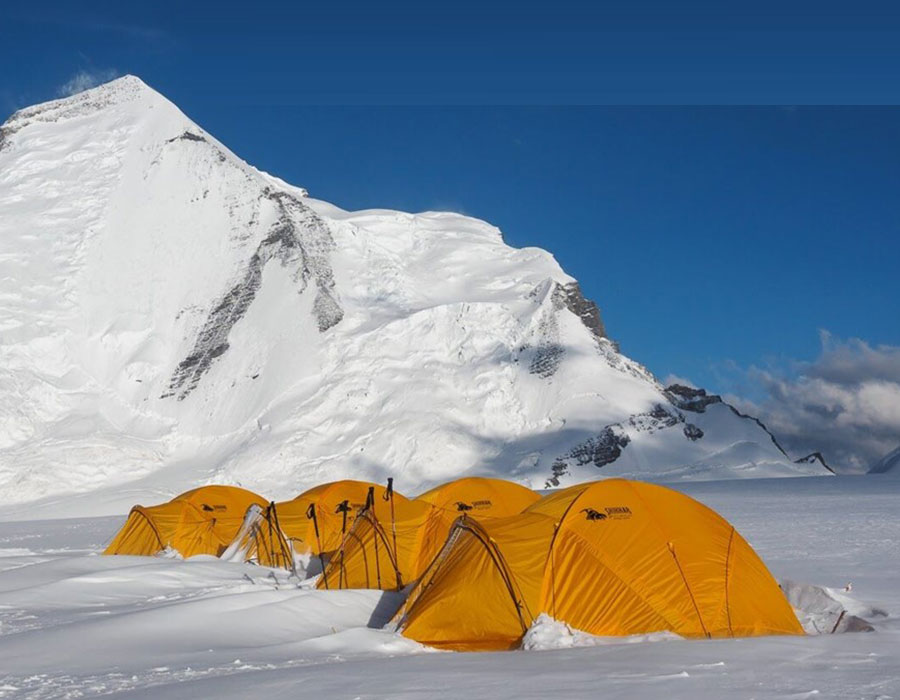
- 2 nights in a dome tent on a sharing basis
- Meals as per the above-mentioned program
- Transportation from Dehradun to Dehradun
- Professional trek leader / guide
- Camping equipment: tent, sleeping bag, mattress
- Kitchen and toilet tent
- First-aid kit
- Permit and entry fees
Exclusion
- GST 5%
- Personal expenses such as table drinks, room service items, telephone calls at the camps, tips, etc.
- Any additional expenses caused by changes to the trip program due to circumstances such as weather conditions, sickness, natural disasters, riots, etc.
- Liability for or insurance against injury, loss of life, accidents, or loss of goods.
- Any personal high-altitude porter, riding horse or pony.
Carry cash for tea, snacks and tips. The last ATM is in Ukhimath.
Enquire Now
Photo Gallery


Our Group Sites